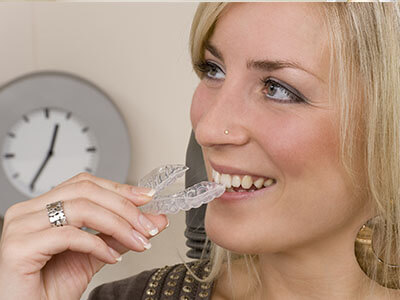
Initial consultation and assessment
We begin by reviewing your oral health, bite relationships, and goals for treatment. This evaluation defines what aligner therapy can achieve and whether any preparatory care is advisable before starting.


Invisalign® has become a go-to option for adults and teens who want orthodontic improvement without the visibility and restrictions of traditional braces. Using a series of clear, removable aligners, this system moves teeth in carefully planned stages so patients see steady progress without changing how they live, eat, or speak. The result is a gradually transformed smile that fits into everyday life rather than standing in the way of it.
Rather than relying on brackets and wires, Invisalign® employs a sequence of custom-made aligners that fit snugly over the teeth. Each aligner advances the teeth a small amount, then is replaced by the next in the series to continue the process. Because the stages are gradual and the aligners are transparent, most people notice improvement long before others do.
This aligner approach offers fine control over tooth movement. Small attachments or elastics may be used in selected cases to guide rotations or bite changes, but the overall strategy emphasizes a predictable, step-by-step progression. Patients appreciate the visual discreteness while providers value the ability to plan and monitor incremental shifts.
Comfort is another advantage. Smooth plastic aligners reduce the irritation that can come from metal brackets and wires. Since aligners are removable, routine oral hygiene remains straightforward: brush and floss normally, and maintain regular dental cleanings to support oral health throughout treatment.
Modern clear aligner therapy begins with an accurate digital record of your mouth. A fast, precise scan replaces messy impressions in most practices and produces a three-dimensional model that clinicians use to map the entire treatment. That digital model allows your provider to visualize each stage of tooth movement and identify where attachments or adjustments may be needed to achieve the intended outcome.
Using specialized software, the treatment is planned in sequence so you can preview the projected progression of your smile. This planning phase is a collaborative moment: your provider configures movements to balance function, esthetics, and long-term stability while taking your goals and anatomy into account. The aligners are then manufactured to those exact specifications.
Because the process is driven by digital data, adjustments later in treatment can be handled efficiently. If teeth do not move exactly as expected, a provider can update the plan and produce refinement aligners to continue toward the desired result. The combination of technology and professional oversight is what makes this method both flexible and reliable.
Successful aligner therapy is built on consistent wear. Most patients are advised to wear their aligners for the majority of the day, removing them briefly for meals and oral care. This removable design is convenient, but it also means that discipline is important—skipping wear time can slow progress or require additional refinements to reach the intended outcome.
Appointments are generally shorter and less frequent than traditional orthodontic treatment. Once the series begins, the clinical check-ins focus on progress, oral health, and any necessary refinements. Providers will review hygiene, evaluate fit, and make adjustments to attachments or staging when appropriate. These visits keep the plan on track without frequent lengthy appointments.
Daily care is straightforward: remove aligners to eat, rinse them when you take them out, and brush your teeth before reinserting them. Keeping aligners clean helps maintain oral health and prevents staining. Your clinician will share simple cleaning tips to preserve the fit and appearance of the aligners throughout treatment.
Invisalign® treats a wide range of alignment and bite issues, from mild crowding and spacing to many cases requiring more complex tooth movements. Adults often choose aligners for their discreet look and lifestyle compatibility, while many teenagers can also be good candidates when treatment goals align with clinical criteria and compliance expectations.
That said, not every dental situation is identical. Cases involving severe skeletal discrepancies, significant jaw misalignment, or advanced periodontal disease may need different approaches or a combination of therapies. A thorough clinical evaluation—examining bite, tooth movement potential, and oral health—is the essential first step to determine whether clear aligners are the right tool for a patient’s goals.
Because individual anatomy and habits affect treatment, candidacy is best decided in consultation with a trained provider. During an initial exam you’ll receive a clear explanation of what can be accomplished and the best pathway to achieve a healthy, stable result.
At the office of Drs. Kenneth & Robin Rawlinson, we combine modern orthodontic techniques with a patient-centered approach. Technology like digital scanning and precise planning tools allows us to tailor each treatment plan to the person in the chair, not to a generic template. Our commitment to high-quality dentistry means we focus on long-term oral health as well as visible results.
Care in our practice is collaborative: we review digital treatment plans with patients, explain the expected steps, and outline how we will monitor progress. You’ll get clear guidance about day-to-day responsibilities—proper wear, hygiene, and when to seek help for unexpected fit issues—so you can move confidently through each stage.
We emphasize comfort and communication, ensuring you understand the rationale behind recommended movements and feel supported throughout the process. Our goal is to deliver predictable, stable alignment while preserving the natural function and appearance of your teeth.
Starting treatment typically involves a consultation, an updated clinical exam, and a digital scan or impression to launch the planning phase. From there, the stepwise nature of aligner therapy means progress is visible and measurable as you move through the series of custom trays.

We begin by reviewing your oral health, bite relationships, and goals for treatment. This evaluation defines what aligner therapy can achieve and whether any preparatory care is advisable before starting.
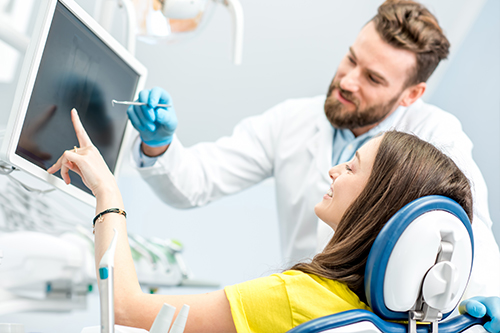
A digital scan or precise impression creates the model for your custom plan. You’ll often be shown a projected progression so you can understand how teeth will shift through treatment.
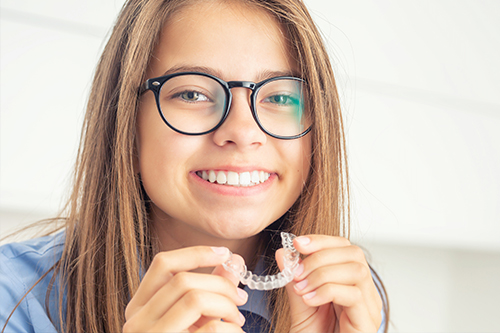
Your aligners are manufactured to the planned sequence; occasional attachments and targeted adjustments help guide specific movements with greater accuracy and comfort.

Regular check-ins ensure the plan is progressing as expected. If refinements are needed, your provider will revise the sequence to help you achieve a stable, functional outcome.
*Invisalign® is a registered trademark of Align Technology, Inc.
When you’re ready to explore whether clear aligner therapy is right for you, our team stands ready to guide the process with clarity and care. Contact the office of Drs. Kenneth & Robin Rawlinson, LLC for more information or to schedule a consultation.
There are many options for patients who want to avoid metal braces! The most popular alternative orthodontic treatment is Invisalign®, which are clear plastic aligners designed to straighten teeth. After an examination of your teeth, your dentist will determine which option is best suited to your wants and needs.
According to the Invisalign® website, the cost for treatment is approximately the same as the cost for metal braces. A portion of this cost may be covered by your insurance. Please call us to set up a consultation and discuss potential payment plan options.
The first step is to schedule a consultation with your doctor, so they can devise a treatment plan that is best suited to your individual dental needs. Once approved, you will receive your first set of aligners. Your doctor will then regularly monitor the movement of your teeth and new aligners will be ordered according to the progress made in your treatment plan.
Invisalign® aligners are made of clear, flexible plastic. The company received a patent for this material – SmartTrack® – to be used exclusively for Invisalign treatment purposes. These aligners are FDA approved and nearly invisible!
Your doctor will give you an estimate regarding how long your Invisalign® treatment should take, which will depend on your specific needs. The average length of time for treatment is approximately 12-18 months. However, some patients may see results far sooner. Remember to wear your aligners exactly as instructed by your doctor to obtain the best results.
Your doctor will most likely recommend that you wear retainers following your Invisalign® treatment. This is a precaution that will prevent your teeth from shifting back to their original positioning. It is important to follow your doctor's instructions exactly to ensure long-lasting results.
You must wear your aligners for up to 22 hours daily. You may remove them for eating, drinking and regular oral hygiene.
No. Unlike braces, you may eat whatever you like as long as you remove the aligners before eating. Prior to placing the aligners back on, it is important to brush your teeth and the aligners after you eat.
Like any orthodontic treatment, there is a short adjustment period. The more you speak with the aligners on, the quicker you will adjust.
There will be some pressure and minor discomfort for a day or two after each initial insertion. This is a sign that your teeth are moving sequentially into their final position.
It is recommended that you remove your aligners prior to chewing gum as the gum will stick to the aligners.
We discourage smoking with aligners as the cigarette smoke will tend to discolor them.
Brushing them with toothpaste will keep them fresh and clean.
Regular office visits are every five to six weeks. This will ensure that your Invisalign treatment is progressing as planned.
All orthodontic patients are instructed to wear their retainers at night indefinitely. Sleeping with your retainers in at night will ensure a healthy bite and maintain the new position of your teeth.
Yes, if their teeth, including second molars, have grown in completely.
Our friendly staff is dedicated to caring for you and your entire family's oral health and well-being. We take the time to create a personalized treatment for each patient and we offer a wide range of services. It is our goal to make your visit with us an extremely pleasant one and to send you home with a beautiful and healthy smile.
Phone